Designing offices for hybrid working
Hybrid working is not “fewer desks.” It is a different rhythm: some days the office is for collaboration and alignment; other days people need to do focused work elsewhere. Space has to flex without feeling empty on quiet days or overcrowded on peak days.
These are the design principles that keep hybrid workplaces functional — not just fashionable.
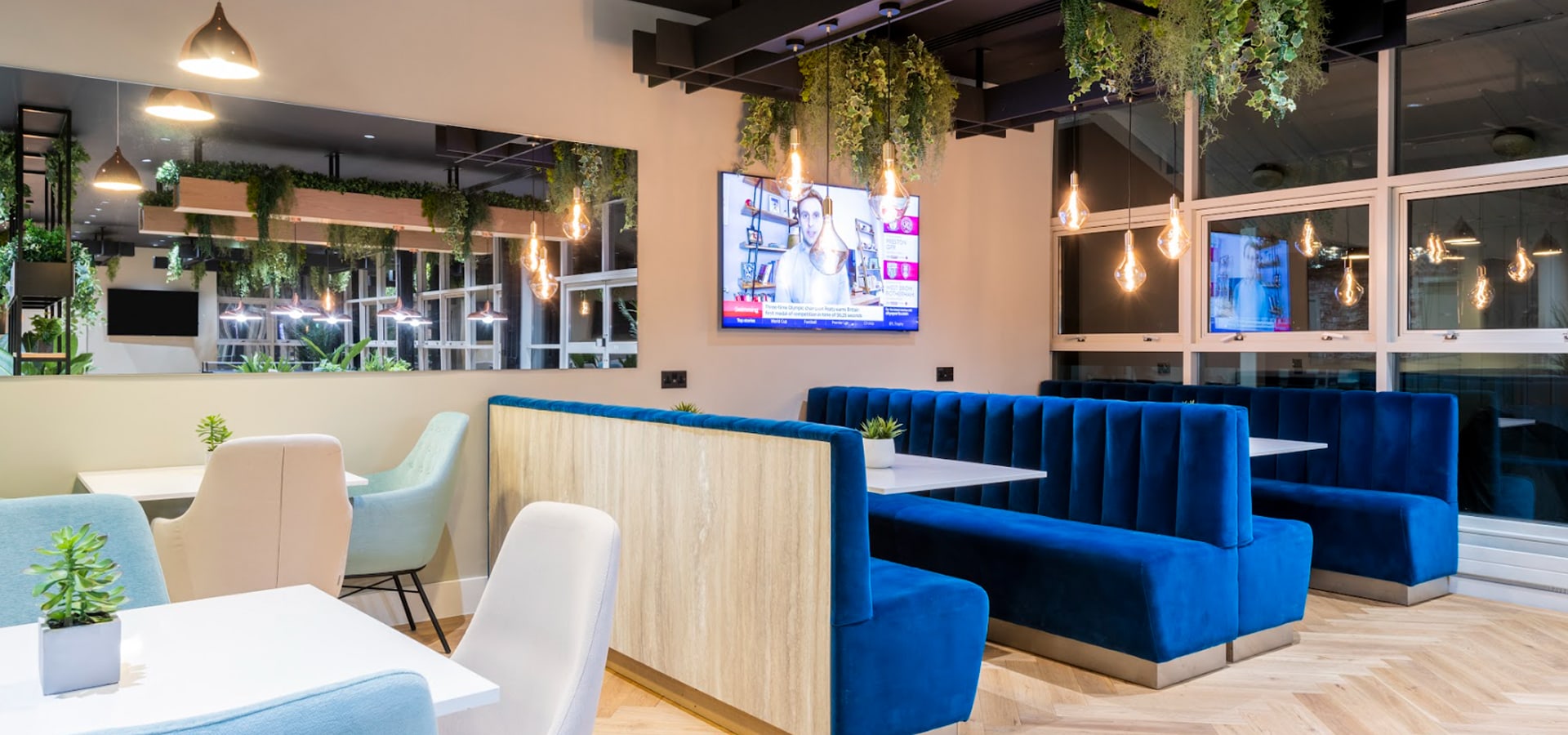
Decide what the office is for
Most organisations get value from the office for onboarding, culture, mentorship, and work that benefits from presence. Design should reinforce those uses rather than replicating what people already do well at home.
That shift changes the ratio of meeting rooms to desks, and the quality of collaboration settings.
Neighbourhoods, teams, and fairness
If desks are shared, people need clarity: how to book, how teams sit near each other, how visitors are accommodated. Technology supports policy; it cannot replace it. Poorly designed booking systems create daily friction.
Equity in hybrid meetings
Rooms need camera and microphone placement that include remote participants properly — sightlines, lighting, and acoustic treatment. Hybrid fails in small ways every day when AV is awkward; fixing that is design and technology together.
Peak-day planning and capacity
Model peak attendance — not average headcount. Lobbies, lifts, tea points, and WC provision all feel different on peak days. Design for the busy Tuesday, not the quiet Friday.
Translating strategy into a fit out
Hybrid policy should be translated into briefs a contractor can build: numbers of focus rooms, types of collaboration settings, cable and power strategy, and AV standards. If you want help turning policy into space, start with a workplace conversation — not only a furniture catalogue.